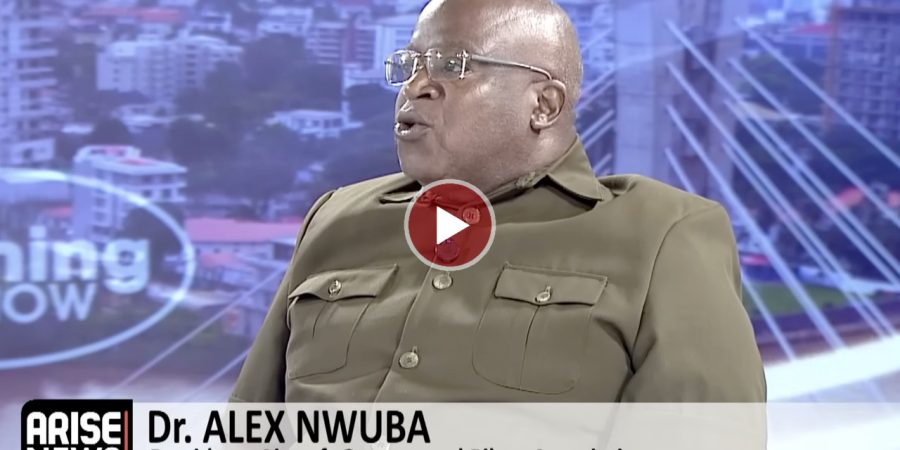
The President of the Aircraft Owners and Pilots Association, Dr. Alex Nwuba, says Nigeria’s aviation industry is not suffering from a fuel supply problem but from a deepening pricing crisis driven by global market forces, insisting that domestic production has not translated into affordability for airlines.
Speaking in an interview with ARISE NEWS on Saturday regarding the rising cost of aviation operations and the threat of industrial action by airline operators, Nwuba said the warning of a strike was primarily intended to draw government attention to worsening economic pressures in the sector.
“The state of Hormuz is not our challenge. It is the global pricing nature of jet fuel that is our challenge, which has taken the cost way out of the realm of ability of airlines to pay within the domestic market, So the state of Hormuz is not our challenge. That is most of the world’s challenge. The challenge is price. And price is hitting the bottom line financially for airlines, our challenge is not supply. Our challenge is price.”
He explained that the core of the crisis lies in aviation fuel costs. “The airlines have been facing price increases that have tripled fuel as a major component of the operations, already 40 percent of the cost prior to this increase.”
According to him, the impact of the price surge has been compounded by the inability of airlines to pass costs to passengers. “And at the same time, airlines cannot increase fares because, you know, we’ve essentially maxed out on what the capacity of consumers are to pay these prices.”
Nwuba stressed that Nigeria’s aviation crisis should not be misdiagnosed as a supply shortage problem. “The state of Hormuz is not our challenge. It is the global pricing nature of jet fuel that is our challenge, which has taken the cost way out of the realm of ability of airlines to pay within the domestic market.”
He further clarified that while global disruptions including geopolitical tensions affecting oil routes. “So the state of Hormuz is not our challenge. That is most of the world’s challenge. Our challenge is how to deal with an international price crisis without the ability to raise fares.”
He noted that the traditional airline pricing model. “Because traditionally, when prices or costs go up for airlines, they increase the fares. But I think we’ve hit the point where more people will be on the road if we raise prices.”
Nwuba said the aviation industry is now caught in a fragile balance where operators are forced to maintain services. “They may choose to reduce some of the capacity routes on the routes that are not as profitable. The good routes will continue to see traffic, maybe not as high.”
He also addressed concerns that airlines might shut down operations. “Airlines will not stop operating.”
On government intervention, Nwuba said there are multiple policy options available. “There are taxes, all kinds of logistics costs that are built into that price that the federal government, as a first step, can, during this period of crisis, eliminate.”
He acknowledged public sensitivity around subsidy policies. “It could be the provision of subsidy, which many people object to. It could also be the provision of low-interest loans to beat them through the war.”
He further argued that a structured and transparent subsidy framework could help lower domestic aviatiom costs. “If we look at what India has done, it is a subsidy regime.”
Nwuba also said the broader economic implication of rising aviation costs extends beyond the industry. “If we stopped flying, food will not get delivered, medicines will not get delivered, people will not be able to attend important business meetings.”
He stressed that aviation remains an essential service. “Only a very low percentage, under two percent of Nigerians fly by air, and the primary reason is cost.”
Nwuba argued that improving affordability would significantly expand the aviation market. “If you look in the US, there’s a lot of headroom. We’re just not delivering the solutions that enable more people to fly.”
He also addressed concerns about safety amid financial pressure. “Safety is the number one priority of the airline industry. An accident is not something you can walk away from.”
He said airlines would rather reduce operations than compromise safety standards. “That is why the option always sits on the table to shut down certain parts of the operation.”
On fuel supply stability, Nwuba dismissed fears of scarcity, citing official reserve estimates that indicate sufficient availability in the country.
“The Nigerian Petroleum Regulatory Commission has told us that we have 74 days reserves based on our planning.”
He reiterated that Nigeria’s challenge is not availability of jet fuel but volatility in pricing tied to global oil market dynamics and currency-related cost transmission. “Our challenge is price. And price is hitting the bottom line financially for airlines.”
Nwuba also rejected the idea that fuel pricing should be viewed in isolation, explaining that, “There’s so many factors that go into the airline economics.”
He gave examples of route pricing inconsistencies. “Distance is not a factor in pricing. There’s so many other factors that go into it.”
On structural reforms, he said Nigeria must move beyond temporary interventions. “We have taxes that are not supposed to be there in the first place.”
He argued that multiple agencies within the aviation value chain extract revenues. “So as soon as this money, 50%, is taken, that money goes to the federal government and the airport is left with only 50% to meet its obligations.”
Nwuba said sustained consultation between government, airlines, and regulators is essential. “There hasn’t been wider consultation with stakeholders in terms of finding a lasting solution to many of our problems.”
He concluded that Nigeria’s aviation crisis will not be resolved by short-term negotiations alone but by addressing structural distortions in pricing, taxation, and regulatory policy. “We need to see more action.”
Erizia Rubyjeana
Follow us on: