
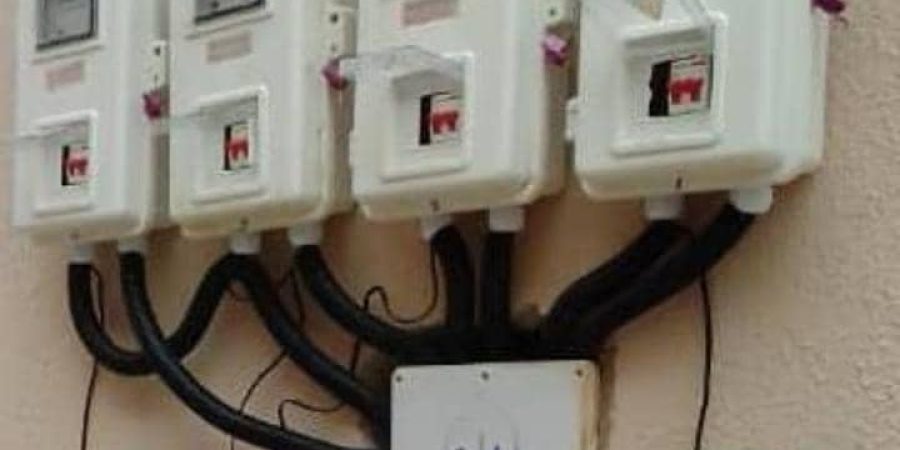
Eko, Ikeja and Abuja Electricity Distribution Companies (Discos) emerged as the top performers in Nigeria’s electricity metering drive in the first two months of 2026, as power distribution firms collectively installed 241,590 meters between January and February, according to new data released by the Nigerian Electricity Regulatory Commission (NERC).
The latest NERC factsheet on the metering status of Discos showed that the industry’s overall metering rate improved from 57.93 per cent in January to 58.57 per cent in February, reflecting gradual progress in reducing estimated billing and improving transparency in electricity consumption.
The report indicated that the total number of active electricity customers in the country rose from 12.23 million in January to 12.31 million in February, while the number of metered customers increased from 7.09 million to 7.21 million within the same period.
Specifically, the industry added 119,792 newly metered customers in January and 121,798 in February, bringing the cumulative figure for the two months to 241,590, the NERC report explained.
Among the Discos, Eko Disco maintained the highest metering penetration nationwide, posting an 87.15 per cent metering rate in January, which further rose to 87.62 per cent in February. The Lagos-based utility also increased its metered customers from 563,734 in January to 577,160 in February.
Closely following Eko was Ikeja Electric, which recorded a metering rate of 86.69 per cent in January and 87.16 per cent in February. The Disco’s total metered customers increased from 1.14 million to 1.16 million during the review period.
Abuja Disco ranked third among the best-performing distribution companies, with its metering rate improving from 78.54 per cent in January to 79.37 per cent in February. The company added over 34,000 customers within the two months, as metered customers rose from 1.06 million to 1.08 million.
The data further showed that Port Harcourt Disco also performed relatively well, improving its metering penetration from 65.47 per cent in January to 66.36 per cent in February.
In contrast, several Discos continued to struggle with low metering coverage despite ongoing efforts by the federal government and sector regulators to close the country’s metering gap.
Yola Disco recorded the lowest metering penetration, with only 30.85 per cent of its active customers metered in January and 31.86 per cent in February. The company had just 162,959 metered customers out of over 511,000 active customers by the end of February.
Besides, Jos Disco remained among the weakest performers, although its metering rate improved slightly from 32.94 per cent to 34.04 per cent within the period under review. Similarly, Kaduna Disco posted a metering rate of 34.82 per cent in January and 35.59 per cent in February, while Kano Disco recorded marginal progress from 35.36 per cent to 35.37 per cent.
The figures highlighted the significant disparities in metering deployment across the country’s electricity distribution network, with some utilities approaching near-full metering while others still rely heavily on estimated billing.
Although Ibadan Disco recorded the largest customer base in the country, with active customers increasing from 2.46 million in January to 2.48 million in February, its metering performance remained modest at just above 52 per cent.
Benin Disco also recorded a moderate metering rate, improving from 55.16 per cent in January to 56.75 per cent in February, while Enugu Disco posted 51.79 per cent and 51.83 per cent respectively.
Widespread metering remains critical to improving revenue assurance in the power sector, reducing commercial losses and restoring consumer confidence in the power sector. The issue of estimated billing has continued to generate tension between consumers and electricity distribution companies, with many customers accusing Discos of arbitrary charges and inadequate service delivery.
Although successive administrations have introduced several interventions to accelerate metering across the country, including the National Mass Metering Programme (NMMP), Meter Asset Provider (MAP) regulations and other financing initiatives designed to bridge the metering deficit, Nigeria still has millions of unmetered electricity consumers more than a decade after the privatisation of the power sector.
In the same vein, the latest NERC data suggested that while progress is being made gradually, the pace of deployment remains slow relative to the size of the country’s metering gap, with over 5 million electricity customers still unmetered nationwide as of February 2026.
An analysis of the figures showed that the industry added only about 1.7 percentage points in metering penetration between February 2025 and February 2026, underscoring the scale of investment still required to achieve universal metering.
Emmanuel Addeh
Follow us on: