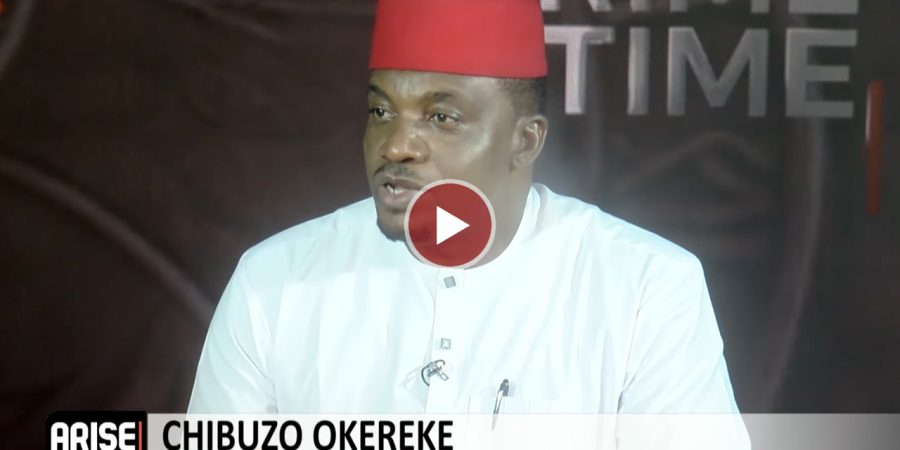
Legislative consultant and public policy analyst, Chibuzo Okereke, has warned that Nigeria’s preparations for the 2027 elections face potential pitfalls unless the government and lawmakers move decisively to clarify electoral rules.
In an interview with Arise News on Friday, Okereke dissected the confusion surrounding the Senate’s handling of real-time electronic transmission of election results. While some lawmakers insist the process was approved, civil society groups have labelled it non-negotiable, warning that public trust is already under strain.
“I don’t know what the lawmakers were doing at a closed-door session, considering or harmonising their position on electoral reform. Actually, a closed-door session is not a legitimate assembly that contributes to lawmaking; it is for consensus building,” Okereke said.
He noted that the Senate President had emphasised that electronic transmission was not scrapped. “Rather, they retained the current provision in section 65 that still allows INEC to exercise discretion on it, which is a challenge. People say we don’t want discretion for INEC; we want mandatory transmission. And we have to be careful because there are policies of lawmaking and chamber policies.”
Okereke criticised the lack of understanding among some opposition members of the legislative process.
“Most of the opposition members didn’t understand the chamber policies involved in this process, and that was why they went into a closed-door session.
“When they came back, they reported progress without stating what that progress was, and now they are waiting for a vote and proceeding, which is another thing altogether.”
He emphasised the importance of defining “real-time” clearly. “If you say real-time, define real-time and the interpretation clause. Let us know what you mean by real-time.
“But we are not voting electronically, so how are we going to transmit? Real-time is after the presiding officer has finished the collation, posted the result, and it transmits.”
Okereke said mandatory electronic transmission is crucial for credibility. “Following from the court position in the 2023 election, we need mandatory transmission of results, and also alignment with section 47 of the Electoral Act on accreditation.
“Today in Nigeria, if you don’t accredit electronically, that election will be nullified in that polling unit, but it’s not so for electronic transmission of results, and that should change. That’s what people should be advocating.
“Because if you mix these provisions and don’t understand the mix, when you go to court, our judicial jurisprudence on electoral matters remains faulty.”
He warned that ambiguity and discretionary power undermine transparency and trust in the electoral system.
“Once there is ambiguity, it gives people an opportunity not to be transparent about what they are doing.
“From the polling units up to the server level, there must be transparency. The process itself must be easily auditable so that when somebody goes and checks, they will know where the fault lies, who dropped the ball, and who complied with the law.”
Okereke also expressed concern over Nigeria’s approach to security. “When an incident happens, the chief executive of the state will need to come to Abuja to explain the details before certain actions are taken.
“We have been calling for the democratisation of our policing system, and the president has accepted it. We need to follow this up with the right political will. We must build local capacity, involve authorities in intelligence, and have quick-response mechanisms to tackle insecurity on the ground.”
He highlighted the broader social implications, particularly for young Nigerians. “The fact that youths are being lured into conflict zones abroad tells you a lot about the failure of our economy and social safety net.
“Citizens, especially the young, have lost hope. Any form of encouragement or opportunity, they jump at it. We must grow our system and increase citizens’ ability to believe in it. If the elites themselves prepare a plan B abroad, what do you expect from the youths?”
Okereke also commented on Nigeria’s international image, following President Trump’s public recognition of the First Lady, Oluremi Tinubu, during a US prayer breakfast.
“This is soft-power diplomacy in play. Faith-based diplomacy is significant on the international stage.
“The First Lady has been strategic in deploying it, especially in the US It’s how these optics are utilised that allows Nigeria to push policy and diplomacy that matters,”he concluded.
Boluwatife Enome
Follow us on: