The Lagos State Government is advancing plans to establish the Lagos International Financial Centre (LIFC), a major initiative designed to attract global capital and position Nigeria as a leading financial hub.
The project is being developed through a partnership between the Lagos State Government, the private sector through EnterpriseNGR, and international partners including TheCityUK. The initiative is currently in its second phase of implementation.
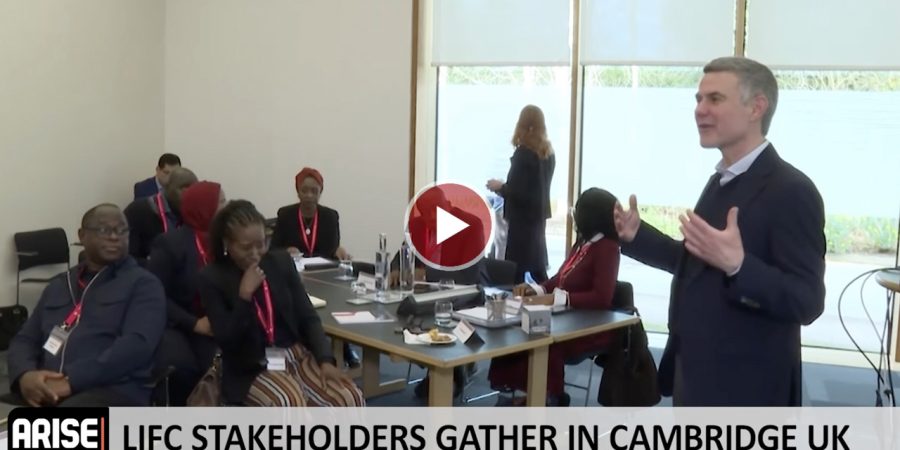
At the Moller Institute in Cambridge in the United Kingdom, key public and private sector stakeholders recently gathered for a training programme aimed at strengthening capacity and aligning stakeholders on the framework required to establish the financial centre.
Among those present were Lagos State Governor Babajide Sanwo-Olu, the Minister of Industry, Trade and Investment Dr. Jumoke Oduwole, Director-General of the Securities and Exchange Commission Dr. Emomotimi Agama, lawmakers, regulators and private sector leaders.
Governor Sanwo-Olu said the gathering reflected a shared national commitment to developing a financial centre capable of placing Nigeria among global investment destinations.
He commended participants for dedicating time to the initiative and emphasised that collaboration between federal agencies, lawmakers and private sector actors would be essential to its success.
Sanwo-Olu noted that the initiative has also received support from President Bola Tinubu, who he said has informally endorsed the discussions and is expecting concrete outcomes that can guide the project.
According to him, the aim is to create the necessary convergence of policy, regulatory and institutional frameworks that will enable Nigeria to join countries and cities that operate international financial centres.
He explained that such centres are not merely symbolic projects but strategic economic tools capable of transforming national economies by attracting global capital.
Sanwo-Olu said Lagos State, as Nigeria’s commercial capital, is well positioned to host the financial centre and lead efforts to connect Nigeria to global financial markets.
Dr. Jumoke Oduwole, Minister of Industry, Trade and Investment, said attracting foreign direct investment has become highly competitive globally and Nigeria must build an enabling environment that speaks the language of international investors.
She explained that regulatory reforms, government-to-government partnerships and stronger engagement with the private sector are essential to achieving that objective.
According to her, the Lagos International Financial Centre is one of the catalytic tools that can help Nigeria achieve President Tinubu’s goal of building a one trillion dollar economy.
Oduwole said the federal government has been actively pursuing investment partnerships around the world, citing engagements with the United Arab Emirates, Brazil, the United States and the United Kingdom.
She noted that the collaboration between Lagos State, EnterpriseNGR and international partners represents one of the most tangible steps towards positioning Nigeria as a global financial destination.
Director-General of the Securities and Exchange Commission, Dr. Emomotimi Agama, stressed that knowledge and capacity building are critical to establishing a successful financial centre.
Agama described the training programme as essential in ensuring that stakeholders fully understand the concept and operational framework of an international financial centre before implementing it.
He praised the Lagos State Governor for leading the initiative and bringing together stakeholders across government institutions and the private sector.
According to him, international financial centres operate successfully in cities such as Singapore, Dubai, Hong Kong and London, where deliberate policies have been implemented to attract global investment.
Agama said Nigeria must learn from these models and adapt them to its own environment in order to strengthen investor confidence and deepen financial markets.
Agboje Aig-Imoukhuede, Co-Chair of the Lagos International Financial Centre and Chairman of EnterpriseNGR, explained that international financial centres are specialised jurisdictions within countries that are deliberately structured to attract financial institutions and investors.
He said cities such as London, Singapore and Dubai have benefited significantly from becoming global financial hubs because they created legal, regulatory and infrastructure frameworks that investors trust.
Aig-Imoukhuede noted that Lagos already plays a dominant role in Nigeria’s economy but requires additional structural reforms to meet the technical standards expected of international financial centres.
He said investors consider factors such as rule of law, infrastructure, regulatory stability and technological capacity before committing capital.
According to him, the Lagos International Financial Centre will serve not only as a gateway for international investors but also as a catalyst for domestic investment.
He added that the initiative represents a collaboration between the private sector and government, since many of the reforms required to build a successful financial centre fall within the responsibility of public policy.
Aig-Imoukhuede said Nigeria’s ongoing economic reforms, including efforts to stabilise the naira and strengthen macroeconomic policies, have improved investor confidence.
He noted that currency stability and the ability of investors to move capital in and out of markets are critical considerations for global investors.
He also highlighted the role played by the UK government and TheCityUK in providing technical training and knowledge support to Nigerian stakeholders involved in the project.
According to him, the Cambridge training programme brought together senior government officials, lawmakers, regulators and private sector representatives whose decisions will influence the success of the financial centre.
The discussions also focused on legislative frameworks required to support the initiative, as well as the institutional structures needed to operationalise the centre.
Aig-Imoukhuede said the next steps include expanding the governing council of the Lagos International Financial Centre, recruiting staff and establishing operational offices.
He noted that the location of the centre’s headquarters will be a strategic decision, as international financial hubs often develop around such institutions.
Consultants have also been engaged to develop strategy, legal frameworks and communication structures for the project.
According to Aig-Imoukhuede, the Lagos International Financial Centre is expected to generate significant economic benefits, including GDP growth, job creation, increased foreign investment and stronger financial market development.
He said the broader goal is to create an environment that attracts global investors while also strengthening Nigeria’s domestic investment ecosystem.
The Lagos International Financial Centre initiative is being jointly chaired by Governor Babajide Sanwo-Olu and Aig-Imoukhuede, with participation from federal agencies and private sector organisations.
The project represents one of the most ambitious attempts yet to position Lagos as a global financial hub and deepen Nigeria’s role in international capital markets.
Erizia Rubyjeana
Follow us on: