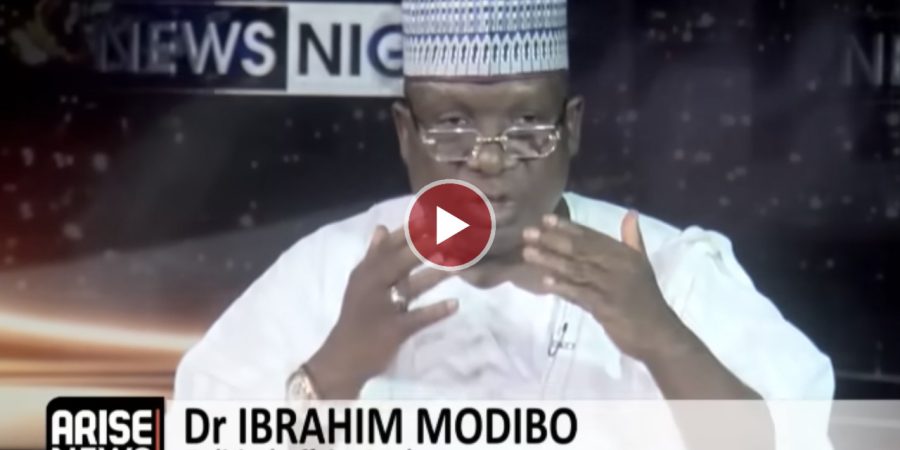
Political Affairs Analyst, Dr Ibrahim Modibo, has described the renewed impeachment moves against Rivers State Governor Siminalayi Fubara as a dangerous power struggle driven by political overreach rather than governance failures.
Speaking in an interview with ARISE News on Friday, Modibo said the crisis threatening Rivers State democracy was rooted in a conflict between political forces, warning that continued interference could destabilise Nigeria’s democratic system.
“The trajectory of the problems confronting Rivers State has to do with conflict of power — conflict of power between two individuals,” he said.
“As Napoleon the Great once said, the worst of us suffer not because of the violence of bad people, but because of the silence of good people.”
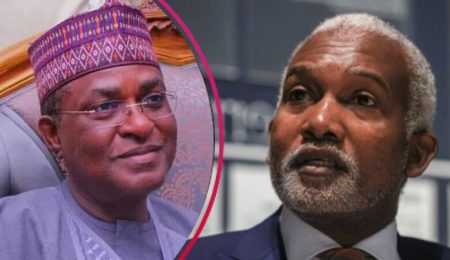
Modibo pointed to the influence of former Rivers State Governor and current FCT Minister, Nyesom Wike, insisting that the impeachment attempts could not be divorced from his political role.
“If you see a bird dancing on the road, somebody is beating the drum somewhere in the bush,” he said.
“For the members of the Rivers State House of Assembly to behave the way they are behaving, there must be a trigger, and all historical perspectives suggest that trigger is coming from one man.”
He questioned the justification for repeatedly moving to remove Governor Fubara from office.
“What exactly has Governor Fubara done to deserve these impeachment attempts?” Modibo asked.
“Why not allow this man to walk? Why not allow him to deliver democracy to the people of Rivers State?”
The analyst criticised what he described as excessive political dominance by Wike, arguing that no godfather should exercise overwhelming control over an elected governor.
“There is no need for compulsion or for him to have an overbearing influence on the governor,” he said.
“Agreed, he is a godfather — so what? Was he not also brought up by someone else? Was he trampled upon when he rose through the system? No.”
On whether Governor Fubara could survive the impeachment pressure, Modibo expressed confidence, provided national party structures intervened decisively.
“Fubara can survive this,” he said.
“With the support of the national secretariat and APC governors, they can form a formidable team to withstand this pressure. Otherwise, we are headed for a very dangerous democratic journey.”
He dismissed many of the allegations raised by the House of Assembly as weak and politically motivated.
“Most of the allegations are frivolous. Frankly, they look comical,” he said.
“When I read them, I laughed. They are pedestrian and personal, driven by private pockets, not public interest.”
Modibo also defended Fubara’s record in office, citing achievements he said were being ignored.
“Based on my research and findings, Governor Fubara has done a lot,” he said.
“There are reports of over 100,000 housing units for the poor, prompt payment of salaries and pensions, and even 13th-month payments to workers. I am not from Rivers State. I have never met him, but facts are facts.”
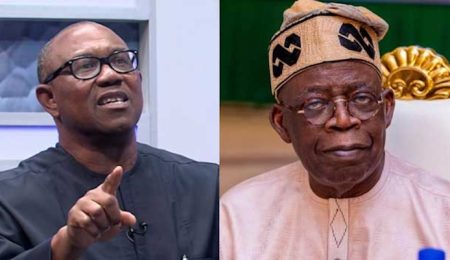
Turning to President Bola Tinubu’s role, Modibo said the President faced a defining political moment.
“For President Tinubu, it is between the devil and the deep blue sea,” he said.
“He must pick a position and nip this crisis in the bud.”
He warned that failing to act decisively would send a dangerous signal to governors who recently aligned with the ruling party.
“If the President abandons Fubara, all governors who crossed over will know they are not safe,” he said.
“This is bigger than Rivers State.”
Modibo urged the President to call Wike to order, arguing that unchecked influence posed risks even to the presidency.
“If Tinubu fails to call Wike to order, even the President is not safe,” he warned.
“When Wike is angry, he is like a bulldog. He demolishes everything in his path.”
He accused Wike of contributing to the collapse of the Peoples Democratic Party and cautioned against similar consequences within the APC.
“Look at what happened to the PDP. It is no longer what it used to be,” he said.
“A structure is meant to build, not destroy. What he calls a structure is a structure of trouble.”
Modibo concluded that removing Fubara through political coercion would have grave implications for Nigeria’s democracy.
“If a sitting governor is removed through impunity, it is a very sad day for democracy,” he said.
“It creates local emperors and makes democracy unsafe.”
Boluwatife Enome
Follow us on: