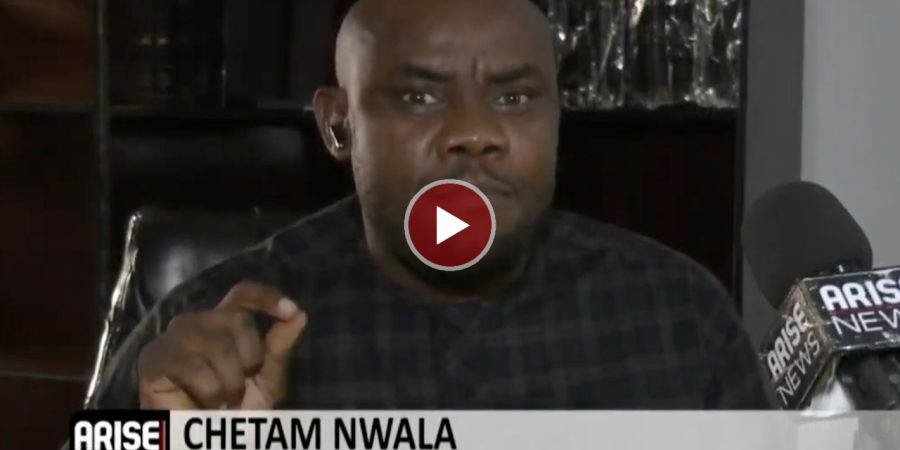
Lawyer and activist Chetam Nwala has criticised a recent Supreme Court judgment, warning that delays, jurisdictional ambiguity and the court’s stance on emergency powers risk weakening democratic checks and empowering the executive at the expense of citizens.
Speaking on ARISE News on Tuesday, Nwala questioned the prolonged timelines for delivering judgments on matters of national importance, arguing that delayed rulings have lost practical value for affected communities.
“When it comes to decisions of court, it’s important to have the timing, to have the opportunity to raise some issues with respect to how a court has continuously delayed delivering judgment, especially on matters of national importance,” he said.
Nwala disclosed that concerns over judicial delays have been raised at professional forums, noting that the issue has become systemic. “Two weeks ago, at the level of the NBA, I stated clearly that one of the interventions I made was also calling on the Supreme Court, and up till now, the Supreme Court has not delivered a judgment on a matter of certain national importance,” he said.
He warned that such delays undermine public confidence in the justice system. “This has become a trajectory, and there’s this general legal principle that justice delayed is justice denied,” Nwala said. “The average man on the street will ask, what is the essence of this judgment? The judgment has today become an academic exercise.”
Referencing the impact of emergency measures in Rivers State, Nwala said the delay has compounded hardship for residents. “We have all moved on as a state, and we are still reaping from the hardship that the state of emergency brought upon Rivers State,” he said, describing the situation as “sad”.
On the substance of the Supreme Court’s ruling, Nwala said the judgment failed to provide clarity, particularly on jurisdiction. “The Supreme Court judgment on this particular decision is clear that the matter was struck out based on jurisdiction,” he said.
He added that while the court expressed opinions on the matter, those views were not binding. “The other opinion expressed by the Supreme Court is merely an opinion and it is not binding at any point because they have stated clearly that they do not have jurisdiction to deal with this particular matter,” Nwala said.
However, he cautioned against dismissing those opinions outright. “We should not just let it slide because tomorrow it may form part of precedents at the lower court level,” he said.
Nwala also expressed disappointment that the judgment failed to settle key constitutional questions surrounding declarations of emergency. “The Supreme Court also created more ambiguity because many of us expected that this judgment would settle the issue of declaration of a state of emergency,” he said. “It did not bring clarity. It has further confused the issue.”
Addressing the court’s position that states lacked the legal standing to challenge the president’s actions, Nwala said the ruling effectively shut the door on accountability. “The Supreme Court has said that the states did not have a cause of action,” he said.
He argued that Rivers State’s governance structure at the time made such a requirement impractical. “Rivers State at the time was under a sole administrator, and the sole administrator would not for any reason give permission to challenge the president’s action,” Nwala said.
According to him, the implications extend beyond Rivers State. “What the Supreme Court has done is to tie the hands of the people and those who can challenge actions of the federal government,” he said, adding, “This gives the executive an easy way out, and that is a danger to our democracy.”
Nwala warned that elected governors could be exposed to similar actions without effective legal remedies. “Governors are likely to be affected by similar actions, so they have the right to challenge it,” he said. “But the Supreme Court said no, you cannot come to us.”
He concluded that the ruling risks long term damage to democratic institutions. “This judgment has further created confusion and given the executive a free hand, which is dangerous for democracy,” Nwala said.
In his closing remarks, Nwala issued a broader warning about the state of Nigeria’s democracy. “This administration is throwing our democracy into an arena that it may never recover from,” he said. “Democracy is being eroded within this nation.”
He added that the judiciary has a responsibility to protect citizens from illegality. “The Supreme Court cannot continue to tie the hands of people from challenging illegality,” Nwala said.
Faridah Abdulkadiri
Follow us on: