
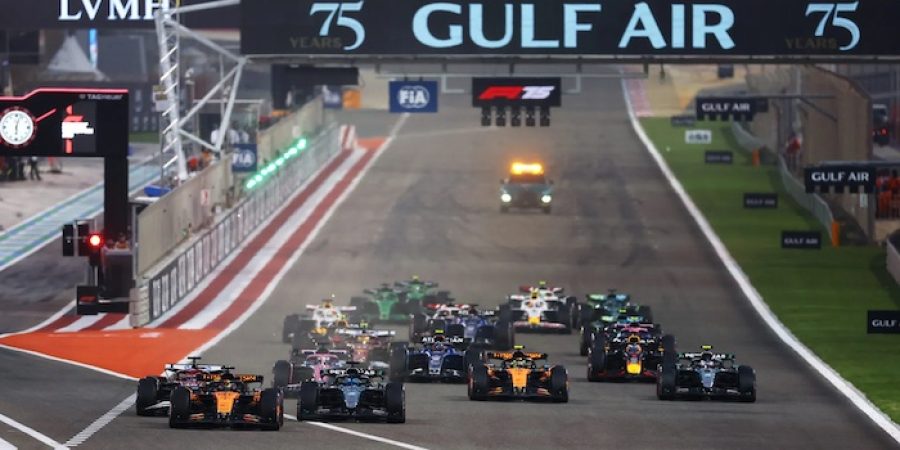
The Bahrain Grand Prix and Saudi Arabian Grand Prix are under threat due to escalating tensions in the Middle East following the US-Israel war with Iran.
Both Gulf states are among those targeted by retaliatory missile strikes launched by Iran in response to US-Israeli air operations. Missiles have reportedly hit hotels, civilian infrastructure, energy facilities, and American military bases in the region.
In Bahrain, the US naval base in the capital Manama’s Juffair district—where much of the F1 personnel typically stay—has already been struck.
The Bahrain Grand Prix is scheduled for 10–12 April, with the Saudi Arabian race in Jeddah following a week later. The Saudi event is near a major oil refinery, previously targeted in a missile attack by Houthi rebels in Yemen four years ago.
A statement from Formula 1 said: “Our next three races are in Australia, China and Japan, not in the Middle East – those races are not for a number of weeks.
“As always we closely monitor any situation like this and work closely with relevant authorities and will always prioritise the safety and security of all those in the sport.”
Although the Bahrain race is five weeks away, F1 has a critical window of around two weeks to decide whether the events can proceed, due to logistical requirements for transporting equipment by sea. Should the war still be ongoing by then, the likelihood of the races taking place is slim.
Even if a full ceasefire and peace talks have been arranged, the sport cannot predict the reaction of outside or proxy groups, which may still render the races too risky to hold.
A decision to cancel would carry major financial consequences, as the hosting fees paid by the two oil-rich nations reportedly exceed $100m. Rescheduling the races is also complicated by a congested calendar, leaving few feasible alternatives.
Several options have been discussed, including holding a replacement race at Portimão Circuit, Autodromo Enzo e Dino Ferrari, or Istanbul Park, but none are considered realistic given the time needed for organisation and ticket sales.
A second race in Japan after the Japanese Grand Prix at Suzuka (27–29 March) has also been suggested, though it remains unlikely due to the impact on personnel and logistics.
With the situation in the region remaining volatile, fans and teams face the real possibility that the two Middle East races may not take place, potentially shortening the season to 22 grands prix.
Boluwatife Enome
Follow us on: