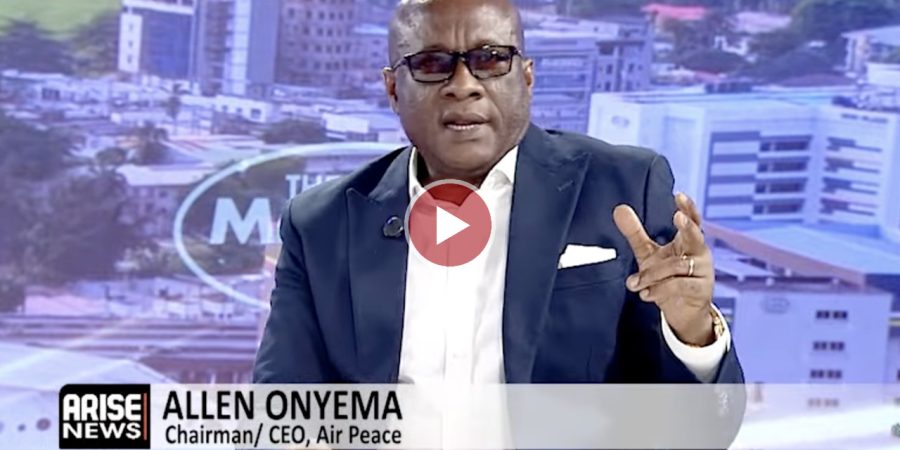
Air Peace CEO Allen Onyema has explained the challenges facing Nigerian airlines in 2023, including a surge in bird strikes, high taxes, and ongoing criticism from government agencies.
In an interview with Arise News, Onyema revealed that Air Peace had suffered 49 bird strikes in Nigeria alone this year, emphasising
how these strikes severely disrupt operations and can ground aircraft for extended periods.
“Air Peace has had 49 bird strikes in Nigeria from January to September. One bird strike could cripple your aircraft for the next one month. At that moment, there’s no two ways about it. These bird strikes often lead to costly delays and serious disruptions in flight schedules.”
Onyema also responded to recent accusations from government bodies, including the Federal Competition and Consumer Protection Commission (FCCPC), which has been investigating price hikes and what it calls “exploitative” fare increases. “We in AON (Airline Operators of Nigeria) have come out to say that enough is enough. The bashing of Nigerian airlines doesn’t stop. It’s very painful when it’s coming from government agencies that should know better. Using the words ‘exploitative’ and ‘coordinated price-fixing’ is very, very unfair to these airlines.”
He refuted claims of coordinated price-fixing, stating that such accusations were unfair and ignored the complex economic factors that airlines face, especially during peak travel periods. “It is untrue that every fare is 500,000 or 400,000. When you go to the inventory, you will still see tickets for 150,000 Naira. During the Christmas period, people buy ahead of time. You can get five or ten tickets costing 150,000, and you can sit on the same aircraft with someone who paid 125,000 Naira, or someone who has paid 350,000 Naira.”
He also provided a breakdown of costs involved in operating an airline in Nigeria, comparing fares locally and internationally. Onyema emphasized that despite the challenges, Nigerian airlines like Air Peace offer some of the cheapest domestic flights in the world. “We still have tickets for as low as 115,000 Naira, which is less than $60.” He pointed out, “Nigerians are flying the cheapest fares in the world domestically. We are running one of the cheapest airfares anywhere.”
Onyema also addressed the issue of taxation and regulatory burdens, highlighting how the excessive taxes on airline operations contribute to the rising costs of tickets. “When you take a ticket of 350,000 Naira, only 81,000 Naira comes to the airline,” he revealed. “The rest goes to taxes and levies.” He called for a reevaluation of the tax structure, emphasising, “The government has got to look at the excessive, multiple taxation. We are suffering from multiple charges. It’s unsustainable for airlines to thrive under this burden.”
Another pressing issue Onyema discussed was the poor handling of aircraft by ground staff, which has led to significant damage to Air Peace’s planes. “One of our brand-new planes, bought with over $85 million, was damaged by a ground handler. The thrust reverser of that engine is gone, as I speak to you.”Onyema continued, “The damage cost us millions of dollars. The engine alone cost about $18 million.”
Onyema also voiced his concerns over the safety of passengers and the need for a more robust regulatory framework. “It’s time to allow airlines that can afford to do their own ground handling to take that responsibility, If the legislation allows it, I am open to that change. It will improve safety and operational efficiency.”
In addition to the issues surrounding bird strikes, high taxes, and poor ground handling, Onyema spoke about the ongoing strain on Air Peace’s fleet. “One of our 777s had an AOG (Aircraft on Ground) for three years because we couldn’t get the engine anywhere in the world. After three years, we finally got a new engine. But when the engine arrived, the ground handler pierced through the center of it. This is sabotage.”
Despite these challenges, Onyema remains committed to Air Peace’s mission of providing affordable and reliable air travel for Nigerians.
“As much as we try to provide quality service, the system is working against us.” He emphasised the need for broader industry reforms, stating, “We need better support from the government, better safety standards, and a fairer tax regime if Nigerian airlines are going to survive and grow.”
Erizia Rubyjeana
Follow us on: