The African Democratic Congress (ADC) and two members of the House of Representatives – Hon. Muhammad Bello Fagge, representing Fagge Federal Constituency of Kano State, and Hon. Yusuf Shitu Galambi, representing Gwaram Federal Constituency in Jigawa State – have called for the immediate suspension of the tax laws, scheduled to take effect on January 1, 2026.
A member of the House of Representatives, Hon. Abdulsammad Dasuki (PDP Sokoto), raised a matter of privilege on the floor of the House last Wednesday, alleging discrepancies between the tax laws passed by the National Assembly and the versions subsequently gazetted and made available to the public.
Under Order Six, Rule Two of the House Rules, on a Point of Privilege, Dasuki told the House that his legislative privilege had been breached, insisting that the content of the tax laws as gazetted did not reflect what lawmakers had debated, voted on, and passed on the floor of the House.
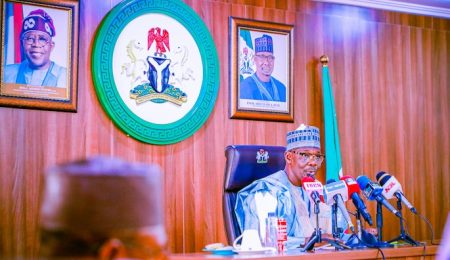
Presiding over the plenary, the Speaker, Tajudeen Abbas, constituted a seven-member ad hoc committee to investigate discrepancies between the tax bills passed and the versions later assented to and gazetted.
Reacting to the development in a statement issued by its National Publicity Secretary, Mallam Bolaji Abdullahi, ADC on Saturday warned that tampering with a piece of legislation after the National Assembly had passed it was an indication that President Bola Tinubu desires to concentrate all powers onto himself.
The opposition party demanded the immediate suspension of the tax laws to allow the legislature to determine the extent of alleged forgery inserted by the Tinubu administration and to take the necessary corrective actions.
It also called for a public inquiry to investigate the circumstances surrounding the criminal alterations of a duly passed law, and to ensure that perpetrators are brought to justice.
The ADC said it has reviewed various reports that confirm doubts that the tax laws passed by the National Assembly and signed into law by President Tinubu contain substantial forgery of key provisions not in the original law passed by the legislature.
According to Abdullahi, ADC’s forensic review of the original laws and the gazetted versions has established beyond a doubt that key accountability provisions were deleted and new provisions inserted, granting the Executive coercive powers to enforce tax laws without recourse to the courts. For example, one of the criminal provisions in the law grants the Bola Tinubu government the express power to arrest and seize the property of anyone who does not comply with the tax laws.
The ADC’s position on the so-called tax reforms is clear. We do not support any tax that would compound the misery and hardship already faced by citizens and businesses. But this issue goes beyond taxation. It speaks to the criminal mindset of a government that has no ethical boundaries, has no regard for democratic institutions, and will do anything to pursue its narrow, selfish agenda.”
The ADC therefore called for the immediate suspension of all 2025 tax laws signed by President Tinubu to allow for a full legislative review.
Speaking in a BBC Hausa’s Ra’ayi Riga programme, Hon. Fagge said the opposition had initially objected to the bills, a move that led to wider consultations across the country before their eventual passage.
“We in the opposition initially objected to the tax bills because of fears that certain provisions could be introduced without proper scrutiny. This led the Speaker of the House of Representatives, Tajudeen Abbas, to convene a committee that traveled across the country, met with traditional rulers and governors, and asked them to submit their grievances and suggestions to the National Assembly. After that process, the bills were harmonised and approved,” he said.
Fagge said the controversy arose when the gazetted versions of the laws differed from what lawmakers approved.
“However, when the laws were later gazetted, what appeared was different from what we approved in Parliament. There were discrepancies, meaning that what was signed is not what we at the National Assembly passed,” he said.
He cited the Nigeria Revenue Service Act, noting discrepancies in Section 25 (accounts and audit) and Sections 26 and 30, and added that the Joint Revenue Board Act also contains discrepancies, particularly in Sections 9, 14, 30, 40, and 44.
“Even if it is just one part that is different from what we agreed, there is a problem,” he added.
The lawmaker warned that some provisions appear to have transferred powers from the legislature and the judiciary to the Executive, particularly to the Nigeria Revenue Service.
“There is no way the legislature will make a law without giving itself oversight functions. That is the essence of checks and balances. The issue goes beyond party politics. This is not about opposition politics. This is about saving Nigeria.”
Also speaking in the programme, Hon. Galambi said public opposition to taxation is often driven by mistrust over how the government spends public funds.
“We all know that people do not like taxes because of the mistrust they have about how the government utilises their money. But if people are certain and have trust, nobody will object,” he said.
Galambi described the allegations of alterations as disturbing, though unproven, and said the National Assembly has established a committee to investigate the matter.
He urged the government to suspend implementation of the tax laws scheduled for January 2026 pending the committee’s findings.
“If alterations are found, the law should be brought back and corrected in line with what the legislators passed. If nothing is found, then implementation can go ahead,” Galambi said.
He also raised concerns about alleged changes that grant the Nigeria Revenue Service enforcement powers without court orders, contrary to what lawmakers approved.
“We said enforcement should only be with a court order. If the court order requirement has been removed, it can create tension in the country, and people will not agree with it,” he said.
Chuks Okocha
Follow us on: