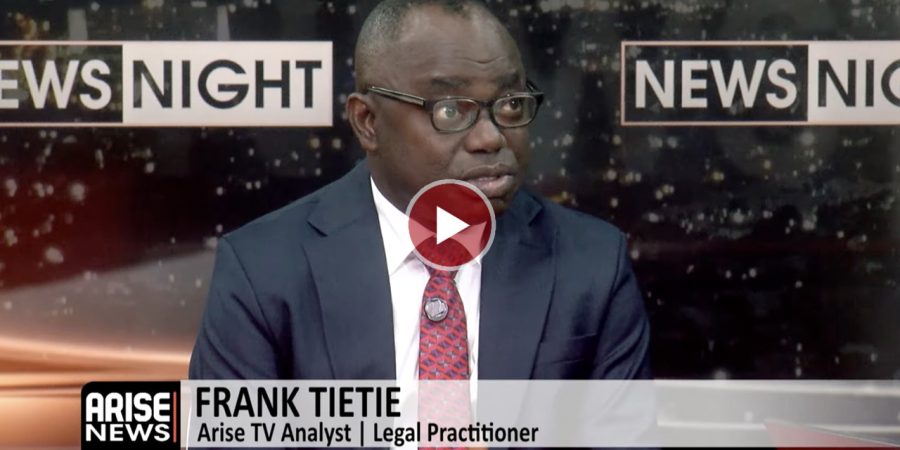
ARISE News analyst and legal practitioner has raised concerns about the use of force by law enforcement officers and the broader implications of policing practices in parts of the state.
Speaking in an interview with ARISE NEWS where he discussed the extra judicial killing of one 28 year old Mine Ogidi in Effurun, Uvwie, Delta State, he argued that extrajudicial killings have, in some areas, become so frequent that they are increasingly seen as normal, describing the situation as a troubling reflection of entrenched impunity within the police system.
“The policeman has been rivaling in some form of impunity, and that’s what happened. It was simply natural. And interestingly, you know I come from that area and I can say authoritatively that extrajudicial killings in that area have been rife, they have been normal. This has just been fortunately captured, but it’s a normal thing,” he noted.
The legal practitioner explained the use of firearms by law enforcement is only lawful in limited situations, such as preventing an ongoing crime or responding to an immediate threat to life. He stressed that any use of lethal force must be necessary, proportionate, and strictly within legal limits.
“I think for the lawful use of firearms by law enforcement, it’s actually to the extent of restraining anybody who is in the process of committing a crime that refuses arrest, or is not only a crime of against property or against the human being. In this case, it’s also for self-defense in order for law enforcement officers to defend themselves when they’re facing a life-threatening situation.”
However, he maintained that the circumstances surrounding the Effurun incident appear to fall outside those legal boundaries. According to him, the situation has raised suspicions of possible misconduct and a lack of accountability among the officers involved.
“But in this case, what we had in Effurun is completely different. Many believe that it was a case of cover-up by the policeman in question and the policemen that were deployed there. They were simply acting a script of the person who actually would have been revealed to be behind the certain Beretta pistol that was about to be sent. But there’s a lot more to that,” Tietie said.
Tietie criticised what he described as a “warped” and dysfunctional system of law enforcement in Nigeria, arguing that the absence of strong accountability mechanisms has contributed to repeated cases of excessive force and unlawful killings across different security agencies.
“The social psychology of law enforcement in this country is warped; it’s dysfunctional. In a situation—look at the kind of people that you arm, you give guns to, and you don’t have a system of accountability,” he said.
Calling for deeper structural reforms in Nigeria’s security system, Tietie stressed the need for stronger local accountability in policing and faster prosecution of officers accused of misconduct.
“Until we imbibe the culture of making security the real issue of politics. Where is the Governor of Delta State? He is quiet because he thinks it’s not his responsibility; he doesn’t take responsibility for the policing of Delta State. Where is the Attorney General? The Attorney General ought to be the one who should have arrested this policeman. The Attorney General should have brought charges for any reason. He ought to have charged them immediately for culpable homicide. These guys should have been tried and given order for a military tribunal right there in Asaba, and then he would ensure—because they are Nigerians, the offense was committed in the Warri area called Effurun—and in that case, they must be tried in the Federal High Court there so that the people will see, so that other policemen that are watching will see that this is what happens.”
He also stated that restoring public trust would require visible enforcement of the law, swift trials, and a renewed emphasis on the value of human life in affected communities.
“Please, Inspector General of Police, return these policemen back to Delta State. Let them be tried in the Federal High Court, either in Warri or Asaba. Let the people see that justice is done and not covered up here. And let the people from that place be responsible for policing, starting with the Governor,” he concluded.
Favour Odima
Follow us on: