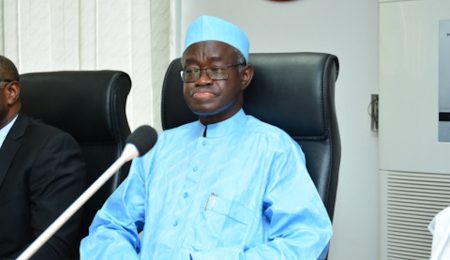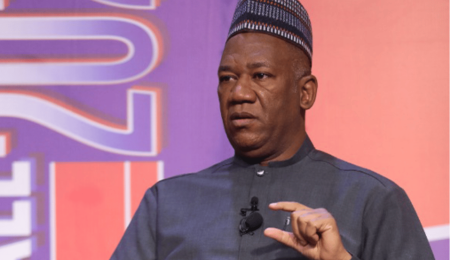

A chieftain of the African Democratic Congress (ADC), Ladan Salihu, has warned that attempts to weaken Nigeria’s opposition in the lead-up to the 2027 general election will ultimately fail, arguing that democracy cannot survive without a credible opposition.
Speaking in an interview with ARISE News on Monday , Salihu said the growing wave of defections to the ruling All Progressives Congress (APC) should not be mistaken for proof that the 2027 election had already been decided, recalling that the Peoples Democratic Party (PDP) once controlled a similar number of states but still lost power.
“History does not lie,” Salihu said. “We have political precedent when it comes to people defecting from one party to another because they think that is where they can catch the golden fleece. And then it crashes right before our eyes.”
He added: “At a point, the PDP had about 28 governors or thereabout, and that did not stop the PDP from losing election to the APC.”
Salihu said the rush by governors into the APC reflected a troubling pattern in Nigerian politics, where elected officials begin to place their faith in political power rather than in the people and God who enabled their rise.
“When governors win election and the second stanza of their political journey is beckoning, they forget the Almighty God that first gave them the power to be there,” he said. “They have now adopted President Bola Tinubu as their own tin god. They believe he can give them power. They believe he can give them a platform to win elections.”
He said he was “shocked and flabbergasted” by what he described as the degeneration of democratic values and warned that the ruling party must understand that opposition parties are essential to democratic survival.
“Politics in Nigeria should be such that the ruling party, whichever party it is, must understand that the practice and principles of present-day democracy cannot exist without an opposition,” Salihu said.
He continued: “Any attempt to emasculate the opposition, either through political inducement or by using the instrument of the state to coerce or intimidate the opposition, will not work.”
Salihu suggested that the full reasons behind the current wave of defections may only become clear after the 2027 elections, when there may be closer scrutiny of the actions of some of those who switched parties.
“The governors are rushing because time will tell,” he said. “Probably when we have an audit of their accounts post-2027, we will have revelations that may give credence to what one governor who defected to the APC said — that when he did not defect, it was because he was not given money, while he alleged that his colleagues were given money and that was why they defected.”
Responding to claims by the APC that the ADC had no programme beyond criticising the government, Salihu said it was expected that defenders of the ruling party would try to dress up the hardship in the country with rhetoric.
“We expect to hear a lot of literature, a lot of prose, from the minders of a failing government,” he said. “The APC cries foul over the agony of Nigerians and tries to subsidise the truth, to make it look like Nigerians are not suffering, to make it look like there is no endemic poverty in the land, and to make it look like, due to selective bad governance and misgovernance, Nigeria is getting better by the day.”
He argued that the ruling party’s reaction to the ADC showed that it was worried about the opposition party’s emergence as a serious political force.
“The fear of the African Democratic Congress is the beginning of wisdom for the APC,” Salihu said. “That is why they have arranged actors to suggest that the ADC should be deregistered.”
He also pointed to what he described as efforts to weaken broader opposition politics, saying Nigerians were already witnessing attempts to undermine alternative voices.
According to him, the ADC is developing policy responses to insecurity and poverty, though he did not fully outline them during the interview because of time constraints.
“The ADC is coming up with a blueprint that will address comprehensively the issue of insecurity,” he said. “We have identified that you do not only need technology, you also need collaboration with the people.”
On poverty, Salihu said the severity of the crisis was already evident across the country and required a detailed policy response.
“Nigerians are living witnesses to the kind of endemic poverty that is in the land — the kind of poverty you can cut with a knife,” he said. “We are articulating a position paper that will comprehensively deal with the issue.”
Although he did not directly lay out the ADC’s alternatives on fuel subsidy removal and exchange rate reforms during the exchange, Salihu insisted that the fundamental issue before Nigerians remained the quality of leadership and the worsening conditions under the APC administration.
“But the fundamental issue is facing the real issues of leadership,” he said.
Boluwatife Enome
Follow us on: