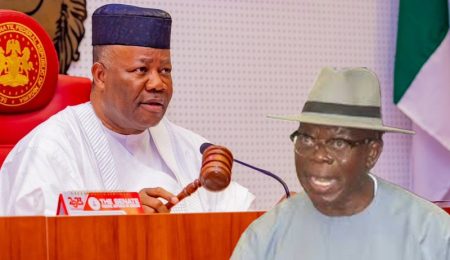

Samson Itodo, Executive Director of Yiaga Africa, has warned that Nigeria’s political party registration process may be deliberately used to restrict opposition participation, amid growing concerns over the actions of the Independent National Electoral Commission.
Speaking on ARISE News on Friday, Itodo said suspicions surrounding the registration of new political parties could not be dismissed, given Nigeria’s political history.
“When it comes to political party registration, there are political shenanigans and perhaps one of the tactics employed by incumbents or political actors is to see to it that a cohesive opposition or a viral and strong political party does not emerge,” he said.
He added, “So I wouldn’t discount some of the perceptions that have been expressed by people about the appropriation or the weaponization of democratic instruments to limit the registration of political parties.”
However, Itodo noted that party registration is governed by clear legal frameworks, including the Constitution, the Electoral Act and INEC guidelines.
“There are three documents that regulate the registration of political parties. The first is the Constitution, the second is the Electoral Act, and the third is INEC’s regulations and guidelines for party registration,” he said.
According to him, the process is structured and involves multiple stages of compliance.
“In fact, in the INEC guidelines, there are about four different stages that any political association that seeks to be registered as a political party must meet,” Itodo said, adding that, “when there is default on the part of those seeking registration, expect the commission as a regulatory institution to activate its powers.”
Addressing complaints by political associations that claim they met all requirements yet were rejected, Itodo pointed to timelines set out in the Electoral Act.
“The 2022 electoral act clearly outlines or prescribes two timelines,” he said. “Any political association that wants to be on the ballot for 2027 elections must be registered 12 months before the date of a general election.”
He also highlighted provisions on party mergers ahead of the polls.
“So any political party or group of political parties that seek to merge for the 2027 elections, they must do so nine months before the date of our election,” he said.
On remedies available to aggrieved groups, Itodo urged them to seek judicial intervention.
“I would strongly advise for those parties to seek legal redress,” he said, stressing that court action has previously resulted in party registrations.
“It will not be the first time that a party will be registered as a result of a court order,” he added.
He further advised INEC to adopt confidence building measures when dealing with political associations.
“My recommendation to INEC is that before it wields the big stick in the interest of confidence building, it should take into confidence the parties that have defaulted in fulfilling the conditions for registration,” Itodo said.
Turning to electoral reforms, Itodo criticised the National Assembly for missing its self imposed deadline.
“We were told that by December this year, the electoral amendment will be ready for assent by the president. They’ve missed that deadline,” he said.
While acknowledging progress in the House of Representatives, he faulted the Senate.
“The House of Reps has concluded its own work. But the Senate is still foot dragging,” Itodo said.
He warned that reforms alone would not guarantee credible elections without changes in political behaviour.
“The 2027 elections are here. We will be having a new electoral act. But if political actors don’t change their attitude, then all the efforts to deliver new electoral act will be an effort in futility,” he said.
Faridah Abdulkadiri
Follow us on: